
Trade shows and marketing events move fast, so standing out is more challenging than ever for american businesses. Over 80 percent of exhibitors believe that flexible display solutions can increase their event success. The rise of modular displays has transformed how companies present themselves, offering customizable options that save time and money. Understanding what makes modular displays unique gives your team the edge needed to create memorable, cost-effective exhibits at every event.
Table of Contents
- What Are Modular Displays? Definition And Basics
- Types Of Modular Display Systems Explained
- How Modular Displays Function And Assemble
- Top Benefits Of Modular Displays For Events
- Cost Considerations And Common Mistakes To Avoid
Key Takeaways
| Point | Details |
|---|---|
| Modular Displays Offer Flexibility | Businesses can easily reconfigure modular displays to meet diverse event needs without investing in new equipment. |
| Cost-Effective Solution | Modular displays reduce long-term expenses by allowing multiple configurations with a single set of components. |
| Quick Setup and Assembly | These displays are designed for rapid setup and breakdown, minimizing labor costs and event preparation time. |
| Integration of Technology | Modern modular displays can accommodate digital elements, enhancing audience engagement through interactive experiences. |
What Are Modular Displays? Definition and Basics
Modular displays represent a revolutionary approach to exhibition design, offering businesses unprecedented flexibility in their event presentation strategies. These innovative systems are composed of interchangeable components that can be rapidly reconfigured to suit different event spaces and design requirements.
Modular displays are essentially customizable exhibition systems that allow exhibitors to adapt their presentation setup without investing in entirely new equipment. Unlike traditional fixed displays, these systems feature components that can be easily assembled, disassembled, and rearranged to create unique configurations tailored to specific event needs. The core advantage lies in their incredible versatility - imagine having a display solution that can transform from a compact booth to a sprawling exhibit with minimal effort.
The fundamental characteristics of modular displays include:
- Interchangeable components that connect seamlessly
- Lightweight and portable design
- Quick and easy assembly without specialized tools
- Ability to resize and reshape for different event spaces
- Cost-effective alternative to purchasing multiple single-purpose displays
From trade shows to corporate conferences, portable display technologies have revolutionized how businesses present themselves. These systems provide marketing teams with a dynamic canvas to showcase their brand, allowing for instant customization that can match the unique requirements of each event venue or audience.
Types of Modular Display Systems Explained
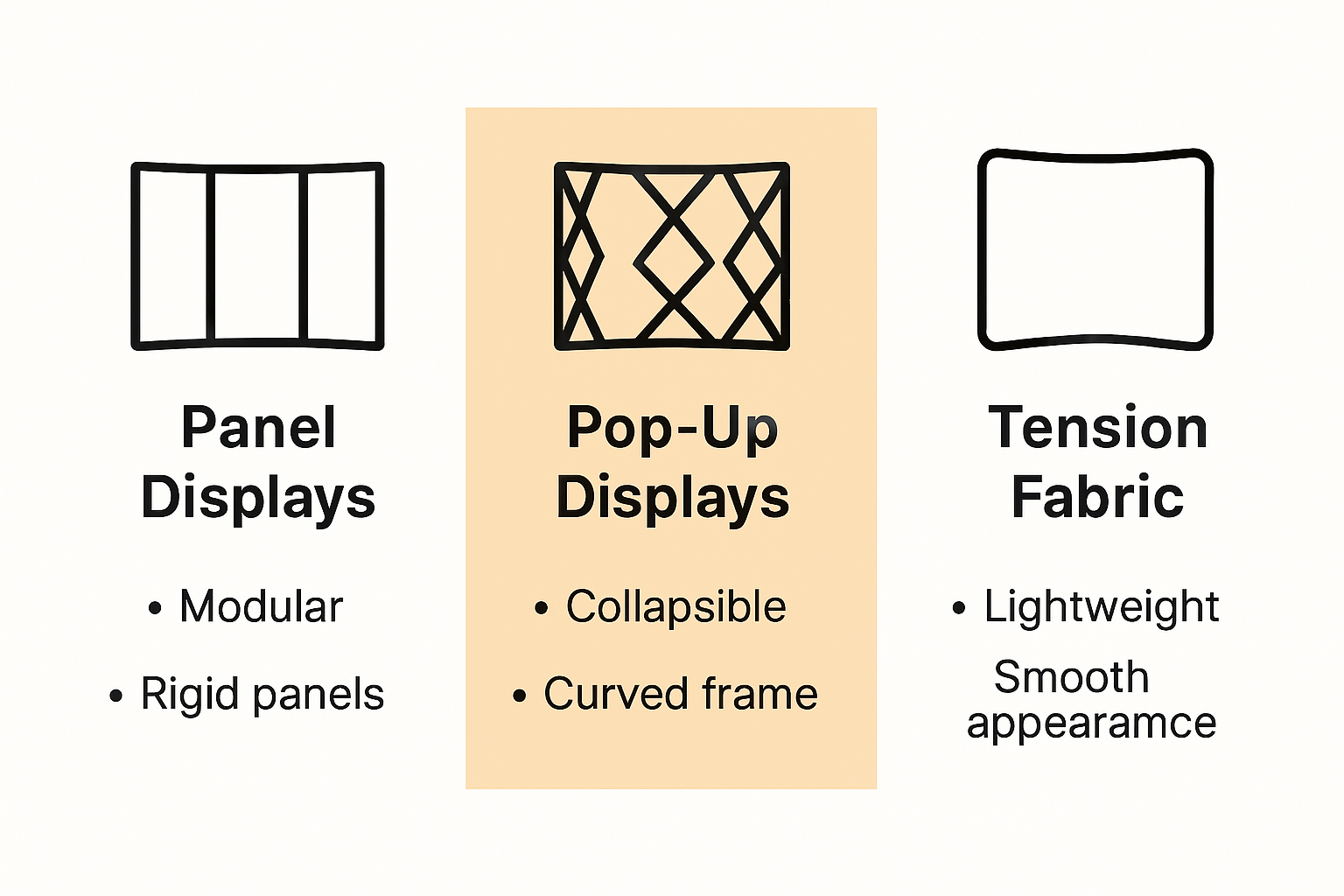
Modular display systems come in a variety of configurations designed to meet diverse exhibition and marketing needs. Understanding these different types helps businesses select the most appropriate solution for their specific event requirements. Trade show display technologies offer remarkable versatility across multiple design approaches.
Pop-up displays represent one of the most popular modular system types. These lightweight structures can expand from compact carrying cases into full-sized exhibition backdrops within minutes. Typically constructed with collapsible frame mechanisms and stretch fabric graphics, pop-up displays provide seamless visual presentations that are both professional and easily transportable.
Another significant category includes frame-based modular systems, which utilize aluminum or lightweight metal frames as core structural elements. These systems allow for extensive customization through:
- Interchangeable graphic panels
- Multiple configuration options
- Scalable design capabilities
- Compatibility with various accessories
- Quick assembly and breakdown
Tension fabric displays offer another innovative modular approach, featuring seamless graphics stretched across lightweight frames. These systems create smooth, wrinkle-free visual experiences that can be configured into curved, straight, or multi-dimensional shapes. Custom display investments often leverage these versatile systems to create memorable brand experiences that adapt to different event environments.
How Modular Displays Function and Assemble
Modular displays represent an engineering marvel of flexibility and efficiency, designed to simplify the complex process of exhibition setup. Exhibition setup technologies have revolutionized how businesses approach event presentations, making installation faster and more intuitive than ever before.
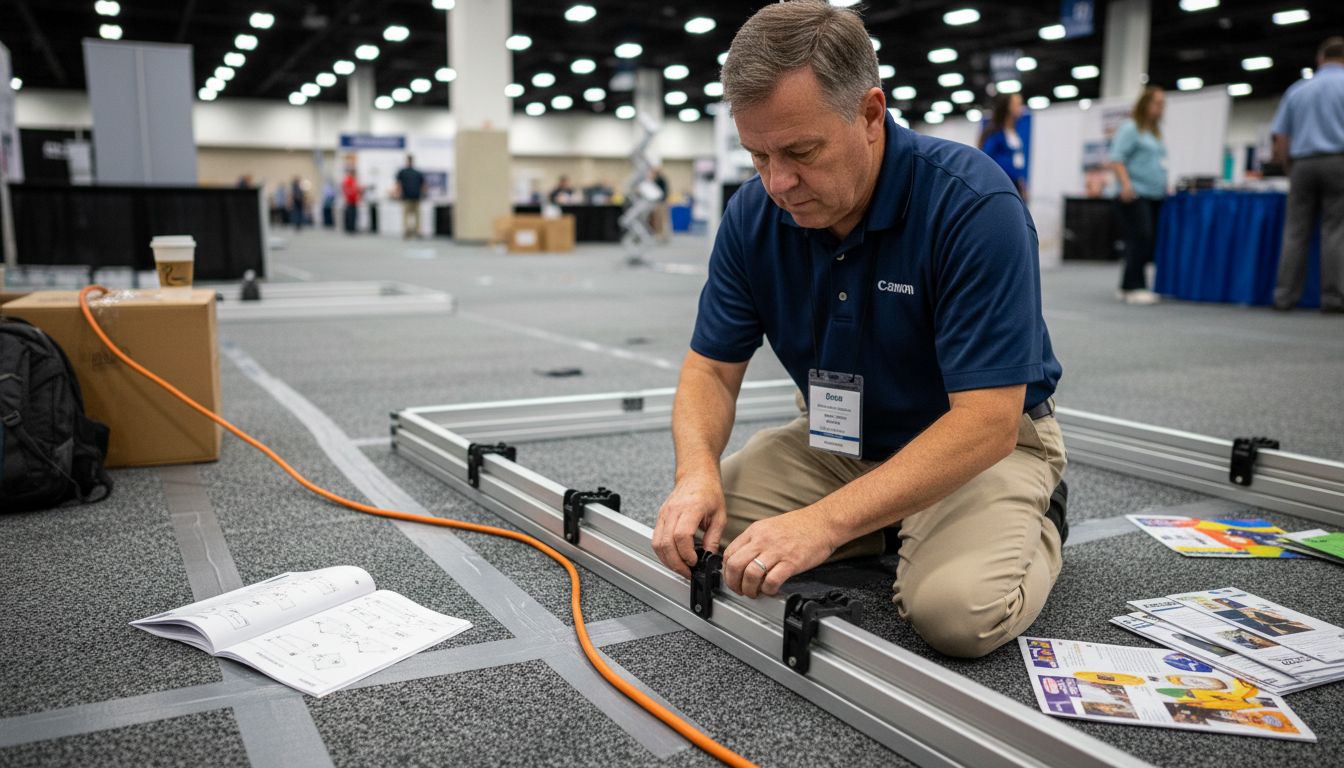
The core functionality of modular displays centers on their innovative connection mechanisms. These systems are engineered with prefabricated components that connect seamlessly, allowing exhibitors to adapt structures without requiring specialized tools or extensive technical knowledge. Lightweight materials like aluminum frames and tension fabric panels enable quick transformation from compact transport cases to full-sized professional displays in mere minutes.
Typical assembly processes for modular displays involve several key steps:
- Unpack the compact display case
- Extend and lock frame components
- Attach graphic panels or fabric skins
- Make final adjustments for precise alignment
- Secure additional accessories or marketing elements
The strategic design of these systems offers remarkable advantages. Custom display solutions leverage lightweight materials and intuitive connection points, dramatically reducing setup time and labor costs. Exhibitors can now quickly reconfigure their displays to suit different event spaces, creating dynamic and adaptable marketing environments that respond instantly to changing presentation requirements.
Top Benefits of Modular Displays for Events
Modular displays have transformed event marketing strategies, offering businesses unprecedented flexibility and strategic advantages. Professional display investments can dramatically enhance a company’s ability to create compelling, adaptable marketing environments.
The cost-effectiveness of modular displays stands out as a primary benefit. Traditional exhibit solutions often require separate purchases for different event configurations, whereas modular systems allow businesses to reconfigure a single set of components for multiple uses. This approach significantly reduces long-term expenses, enabling companies to maintain a professional appearance without continuously investing in new equipment.
Key advantages of modular displays include:
- Rapid setup and breakdown
- Lightweight and portable design
- Scalable to different event spaces
- Reduced transportation costs
- Minimal storage requirements
- Easy graphic panel replacements
Technology integration represents another critical advantage. Modern modular displays are engineered to accommodate digital elements, interactive screens, and cutting-edge marketing technologies. Event display design strategies now leverage these systems to create immersive brand experiences that capture audience attention and facilitate more meaningful engagement. By providing a versatile platform that adapts to evolving marketing needs, modular displays have become an essential tool for businesses seeking to make a lasting impression in competitive event environments.
Cost Considerations and Common Mistakes to Avoid
Navigating the financial landscape of modular displays requires strategic planning and careful consideration. Professional display investments demand a nuanced understanding of both upfront and long-term expenses to maximize return on investment.
Budget allocation plays a critical role in successful modular display procurement. Many businesses make the fundamental mistake of focusing solely on initial purchase price without considering total cost of ownership. This narrow perspective can lead to unexpected expenses and suboptimal performance. Smart organizations evaluate multiple factors including:
- Durability of display components
- Potential reuse across multiple events
- Graphic replacement costs
- Transportation and storage expenses
- Maintenance requirements
Common pitfalls that can inflate expenses include overlooking compatibility between display components, purchasing overly complex systems, and failing to plan for graphic updates. Branded display strategies emphasize the importance of selecting modular systems that offer flexibility without unnecessary complexity. Businesses should prioritize adaptable designs that can be easily modified, ensuring their display investment remains relevant across changing marketing landscapes and event requirements. By approaching modular display purchases as strategic long-term investments rather than one-time expenses, companies can develop more cost-effective and impactful event marketing solutions.
Elevate Your Trade Show Presence with Modular Display Solutions
Modular displays solve the common challenge of adapting your event setup to fit diverse spaces without the hassle or cost of buying multiple fixed displays. If you seek flexibility, rapid assembly, and scalable branding options, modular systems provide the perfect answer. Imagine switching from a compact booth to a vibrant, expansive exhibit that attracts attention and engages your audience without extra investment. Whether you need lightweight frames, tension fabric graphics, or pop-up elements, the right display stands can transform your presence.
Explore our extensive range of customizable display options starting with Roll Up Banner Stands – LIVE DISPLAYS designed for easy setup and maximum visual impact. Complement your booth with durable Gazebos – LIVE DISPLAYS that enhance your brand visibility outdoors or indoor spaces. Ready to build a compelling modular display that adapts to every event? Visit Live Displays now to browse high-quality, customizable products and take advantage of expert support plus free artwork proofs. Act now to turn complex setup frustrations into a seamless, professional experience that sets your brand apart!
Frequently Asked Questions
What are modular displays?
Modular displays are customizable exhibition systems made up of interchangeable components that can be reconfigured for various event spaces and design requirements, offering flexibility in presentation strategies.
What are the benefits of using modular displays for trade shows?
The benefits include cost-effectiveness, rapid assembly and breakdown, portability, scalability for different event spaces, and the ability to integrate technology such as interactive screens and digital elements.
How do I assemble a modular display?
Assembling a modular display typically involves unpacking the components, extending and locking the frame, attaching graphic panels, making alignment adjustments, and securing any additional marketing elements.
What types of modular display systems are available?
Common types of modular display systems include pop-up displays, frame-based modular systems, and tension fabric displays, each providing unique customization options and visual presentation capabilities.
Share:
Exhibit Booth Graphics Guide: Stand Out at Any Event
What Is a Trade Show Display? Complete Guide