

Over 80 percent of American companies invest in event marketing to deepen brand loyalty and spark real customer engagement. With consumers growing less responsive to traditional ads, the need for innovative, interactive connections has never been greater. Exploring how event marketing transforms passive audiences into active participants reveals why this strategy stands out in the crowded modern marketplace.
Table of Contents
- Defining Event Marketing And Its Purpose
- Types Of Event Marketing Campaigns
- How Event Marketing Engages Audiences
- Essential Elements For Successful Events
- Risks, Costs, And Common Pitfalls
Key Takeaways
| Point | Details |
|---|---|
| Event Marketing Engages Consumers | This strategic approach transforms passive communication into immersive experiences, fostering deeper emotional connections. |
| Diverse Campaign Types | Event marketing includes various campaigns such as trade shows and product launches, each serving unique business goals and audience engagement methods. |
| Successful Engagement Strategies | Effective audience involvement hinges on emotional connections, sensory stimulation, and direct interactions, supported by robust digital platforms. |
| Proactive Risk Management | Strategic planning and risk mitigation are essential for avoiding budget overruns and ensuring successful event execution. |
Defining Event Marketing and Its Purpose
Event marketing represents a strategic approach that transforms brand interactions from passive communication to immersive, memorable experiences. By creating engaging environments where consumers directly interact with products and services, businesses can forge deeper emotional connections that traditional advertising struggles to achieve. This dynamic promotional technique goes far beyond simple product demonstrations, instead crafting experiential narratives that resonate with target audiences.
At its core, event marketing is about creating transformative brand experiences that engage consumers through direct, interactive encounters. Unlike standard advertising methods that broadcast messages, event marketing invites participants into a participatory journey. Whether through trade shows, product launches, workshops, or corporate conferences, these events provide platforms where brands can showcase their unique value propositions in living, breathing contexts.
The fundamental purpose of event marketing extends beyond immediate sales goals. Strategic event marketing aims to build long-term brand loyalty, generate meaningful word-of-mouth recommendations, and create lasting impressions that extend well beyond the event itself. Experiential strategies are designed to foster consumer engagement by transforming attendees’ perceptions through immersive, memorable interactions that humanize brands and create emotional touchpoints.
Pro Tip - Event Strategy: Always design your event experience with your target audience’s specific interests and preferences in mind, focusing on creating genuine value and meaningful connections rather than purely promotional objectives.
Types of Event Marketing Campaigns
Event marketing encompasses a diverse range of campaign types, each strategically designed to achieve specific business objectives and engage target audiences in unique ways. Event marketing campaigns can be categorized into distinctive formats that provide brands with flexible platforms for communication and consumer interaction. Understanding these different campaign types allows businesses to select the most appropriate approach for their marketing goals and audience demographics.
The primary types of event marketing campaigns include:
- Trade Shows: Professional gatherings where businesses showcase products and network with industry peers
- Product Launches: Exclusive events introducing new offerings with high-impact presentations
- Conferences: Knowledge-sharing platforms combining expert speakers, workshops, and networking opportunities
- Corporate Seminars: Targeted educational events focusing on specific industry insights
- Experiential Marketing Events: Immersive brand experiences designed to create emotional connections
Comprehensive event marketing strategies recognize that each campaign type requires nuanced planning and execution. Trade shows, for instance, enable direct business-to-business interactions, while product launches create buzz and media attention. Conferences provide thought leadership opportunities, and experiential events craft memorable brand narratives that transcend traditional marketing approaches.
The selection of an event marketing campaign type depends on multiple factors, including target audience preferences, budget constraints, brand positioning, and specific marketing objectives. Successful campaigns seamlessly integrate strategic messaging, engaging content, and interactive elements that transform passive audience members into active brand participants.
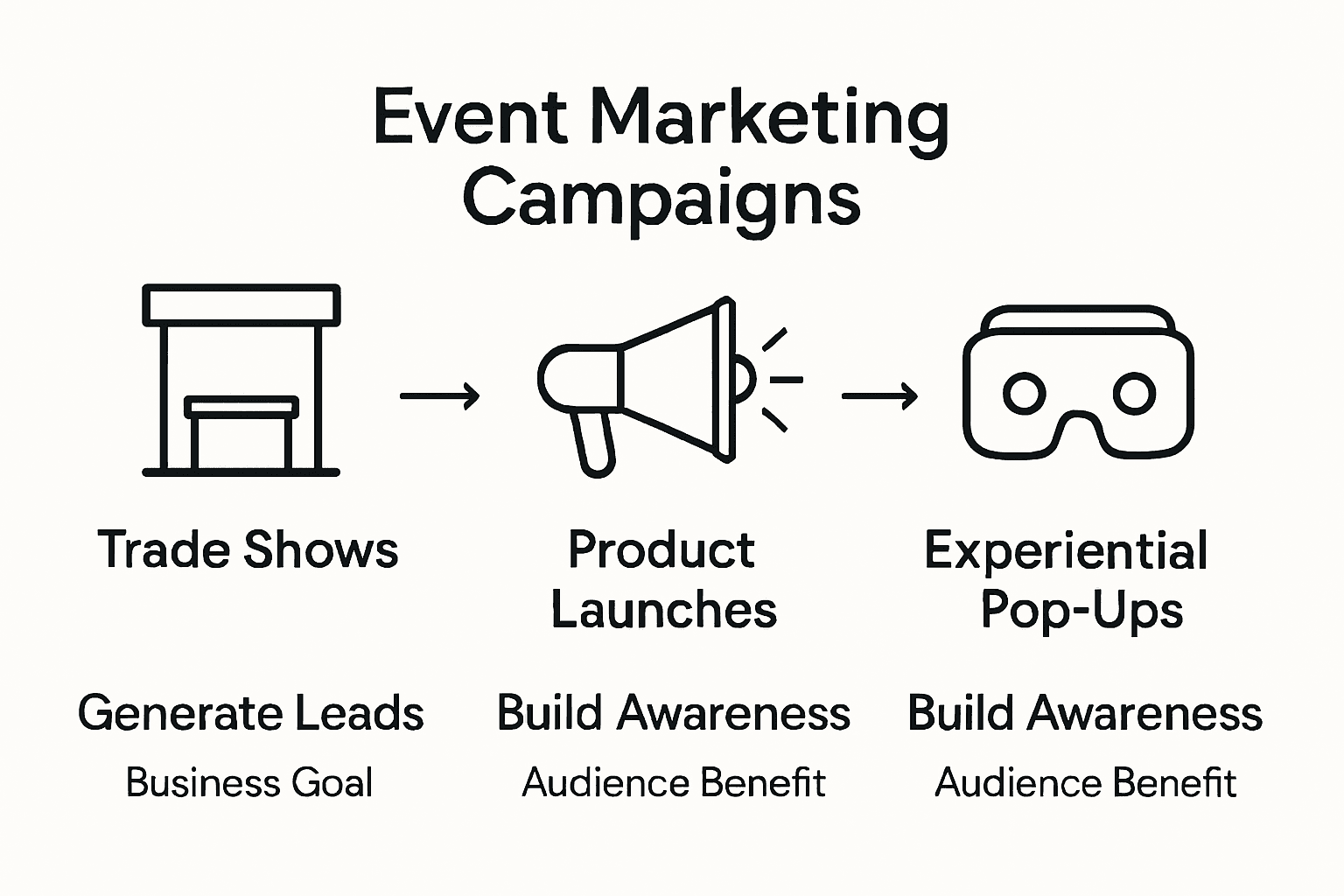
Here is a comparison of common event marketing campaign types and their strategic benefits:
| Campaign Type | Ideal Business Goal | Key Audience Benefit |
|---|---|---|
| Trade Shows | Industry networking & lead generation | Access to new products & contacts |
| Product Launches | New offering visibility & media buzz | Early access & exclusive previews |
| Conferences | Thought leadership & brand authority | Expert insights & networking |
| Corporate Seminars | Education & client relationship | Targeted learning & Q&A sessions |
| Experiential Events | Deep brand engagement & loyalty | Unique experiences & participation |
Pro Tip - Campaign Selection: Carefully analyze your target audience’s preferences and behavior before selecting an event marketing campaign type, ensuring your chosen format aligns precisely with their expectations and communication preferences.
How Event Marketing Engages Audiences
Event marketing represents a sophisticated approach to audience engagement that transcends traditional advertising by creating immersive, interactive experiences. Integrating sponsorship and experiential elements positively influences customer attitudes, transforming passive consumers into active participants who feel genuinely connected to a brand’s narrative.
The engagement strategies in event marketing are multifaceted, leveraging various touchpoints to create meaningful interactions:
- Direct Interaction: Allowing consumers to experience products or services firsthand
- Emotional Connection: Crafting experiences that resonate on a personal level
- Sensory Stimulation: Engaging multiple senses to create memorable brand encounters
- Social Validation: Generating shareable moments that extend beyond the event itself
- Knowledge Exchange: Providing valuable insights and educational opportunities
Social media platforms have revolutionized event marketing engagement by enabling real-time interaction, creating community-driven experiences, and extending the event’s reach far beyond physical boundaries. These digital platforms allow brands to connect with audiences before, during, and after events, transforming single moments into ongoing conversations and building sustained engagement.
Successful audience engagement requires a strategic approach that combines emotional intelligence, technological innovation, and genuine brand authenticity. By understanding audience motivations, creating personalized experiences, and providing meaningful value, event marketing can transform traditional consumer interactions into powerful, lasting brand relationships.
Pro Tip - Engagement Strategy: Design your event experiences with audience participation as the primary goal, focusing on creating interactive moments that invite genuine connection rather than passive observation.
Essential Elements for Successful Events
Strategic planning and meticulous execution are fundamental to creating successful event marketing experiences that resonate with target audiences. Successful events are not accidents but carefully orchestrated interactions that combine multiple critical components to deliver meaningful brand experiences. These experiences must transcend traditional marketing approaches by creating genuine connections that engage participants on intellectual, emotional, and sensory levels.
The essential elements for successful events include:
- Clear Objectives: Precisely defined goals that align with broader marketing strategies
- Audience Understanding: Deep insights into target demographic preferences and behaviors
- Compelling Content: Engaging presentations, interactive sessions, and valuable information
- Technical Infrastructure: Robust technological support for seamless event execution
- Strategic Communication: Consistent messaging across multiple platforms
- Measurement Metrics: Quantifiable methods to evaluate event performance and impact
Incorporating comprehensive social media strategies has become crucial in modern event marketing, enabling real-time audience engagement and extending the event’s reach beyond physical participants. Digital platforms provide opportunities for interactive communication, live updates, and creating community-driven experiences that amplify the event’s overall impact and visibility.

Successful event marketing requires a holistic approach that balances creative design, strategic planning, technological integration, and data-driven insights. Brands must focus on creating immersive experiences that not only communicate their value proposition but also forge emotional connections that transform passive attendees into active brand advocates.
Pro Tip - Event Preparation: Always develop a comprehensive event blueprint that includes contingency plans, ensuring smooth execution and maintaining flexibility to adapt to unexpected challenges.
Risks, Costs, and Common Pitfalls
Event marketing involves inherent risks and potential financial challenges that require strategic planning and proactive management. These challenges can significantly impact an organization’s marketing effectiveness and overall return on investment, making comprehensive risk assessment a critical component of event preparation. Understanding potential obstacles allows businesses to develop robust contingency strategies and minimize potential negative outcomes.
Common risks and pitfalls in event marketing include:
- Budget Overruns: Unexpected expenses that exceed initial financial projections
- Low Attendance: Failure to attract target audience members
- Logistical Complications: Technical or operational challenges during event execution
- Brand Misalignment: Events that fail to communicate core brand messaging
- Resource Inefficiency: Disproportionate investment compared to potential returns
- Audience Engagement Breakdown: Insufficient interactive elements
Inadequate planning can lead to significant marketing inefficiencies that undermine the entire event’s strategic objectives. Brands must develop comprehensive risk mitigation strategies that account for potential disruptions, technological failures, and audience perception challenges. This approach requires a multifaceted analysis of potential weak points and the development of flexible response mechanisms.
Successful risk management in event marketing demands a holistic approach that combines thorough research, realistic budgeting, audience insights, and adaptive planning. Organizations must remain agile, continuously monitoring potential challenges and maintaining the flexibility to adjust strategies in real time. The most effective event marketing strategies view potential risks not as obstacles, but as opportunities for innovation and strategic refinement.
The following table summarizes key risk factors in event marketing and proactive mitigation strategies:
| Risk Factor | Example Challenge | Proactive Solution |
|---|---|---|
| Budget Overrun | Unexpected expenses | Add 20% contingency |
| Low Attendance | Poor audience turnout | Pre-event promotion strategy |
| Technical Failure | A/V malfunctions | On-site tech support |
| Brand Misalignment | Off-message event experience | Consistent branding guidelines |
| Engagement Breakdown | Passive, disinterested audience | Design interactive elements |
Pro Tip - Risk Mitigation: Develop a comprehensive contingency budget that allocates 15-20% of your total event budget for unexpected expenses, ensuring financial resilience and strategic flexibility.
Elevate Your Event Marketing with Custom Displays That Connect
Event marketing thrives on creating immersive brand experiences that engage and inspire your audience. However, delivering these unforgettable moments comes with challenges such as ensuring brand alignment, captivating audience engagement, and overcoming logistical hurdles. At Live Displays, we understand these pain points and offer a wide range of high-quality custom display solutions designed to help you craft compelling event environments including vibrant banners, gazebo setups, and eye-catching flags. These elements are essential for translating your strategic event goals into powerful visual statements that resonate long after the event ends.
Ready to transform your next trade show or corporate event into an immersive brand experience that captures attention and drives loyalty? Visit Live Displays to explore our customizable promotional products with expert printing and free artwork proofs. Take control of your event presence now and make every marketing moment count with dependable, visually stunning solutions designed with your audience in mind.
Frequently Asked Questions
What is event marketing?
Event marketing is a strategic approach that transforms brand interactions into immersive experiences, allowing consumers to engage directly with products and services through various campaigns such as trade shows, product launches, and experiential marketing events.
How does event marketing benefit brands?
Event marketing builds long-term brand loyalty, generates word-of-mouth recommendations, and creates lasting impressions by fostering emotional connections and transforming passive consumers into active participants.
What are the key types of event marketing campaigns?
Key types of event marketing campaigns include trade shows, product launches, conferences, corporate seminars, and experiential marketing events, each designed to meet specific business objectives and engage audiences in unique ways.
What are the essential elements for a successful event?
Essential elements for a successful event include clear objectives, audience understanding, compelling content, technical infrastructure, strategic communication, and measurement metrics to evaluate performance and impact.
Share:
7 Key Exhibitor Booth Essentials for Trade Show Success
Impact of Display Visuals on Event Success