
Most american companies invest heavily in visual displays, yet only a small fraction truly capture lasting attention. With more than 80 percent of viewers forgetting generic displays within days, the gap between passive observation and genuine audience engagement has never been more obvious. Understanding what drives real connection can turn a simple display into a memorable experience. This guide reveals how strategic design and interactivity transform the way audiences relate to displays, helping organizations create more meaningful moments.
Table of Contents
- Defining Audience Engagement With Displays
- Types Of Displays For Event Success
- Key Features That Drive Audience Interaction
- Design Strategies For Maximum Visual Impact
- Common Pitfalls And How To Avoid Them
Key Takeaways
| Point | Details |
|---|---|
| Audience engagement is transformative | It shifts from passive observation to active participation, requiring displays to create emotional connections. |
| Interactive displays are essential | Utilizing technologies like Audience Response Systems enhances viewer participation and fosters meaningful interactions. |
| Effective design drives impact | Combining visual storytelling, multimedia, and psychological strategies can create memorable experiences that captivate the audience. |
| Avoid common pitfalls | Understanding your audience and preventing information overload are crucial for maintaining engagement and relevance. |
Defining Audience Engagement With Displays
Audience engagement represents the dynamic interaction between a display and its viewers, transforming passive observation into active participation. According to the National Gallery of Victoria, audience engagement encompasses the emotional and social relationship between audiences and visual experiences, emphasizing holistic connections across multiple points of contact.
At its core, display engagement goes beyond mere visual exposure. Amazon Ads highlights that true engagement involves capturing attention and fostering meaningful connections that resonate with viewers. This means creating displays that do more than showcase information - they must tell a story, evoke emotion, and create an immersive experience that compels viewers to interact.
Successful audience engagement through displays typically involves several key strategies:
- Designing visually compelling graphics that immediately capture attention
- Creating interactive elements that encourage viewer participation
- Developing narratives that connect emotionally with the target audience
- Utilizing technology to enhance interactivity and information delivery
- Ensuring displays are both aesthetically pleasing and functionally informative
By understanding these principles, organizations can transform traditional displays into powerful communication tools that not only inform but also deeply connect with their audiences.
Types of Displays for Event Success
Event displays have evolved far beyond static backdrops, transforming into dynamic communication platforms that drive audience engagement. Connected Event Group explores the revolutionary potential of interactive display technologies that convert passive viewing into immersive experiences.
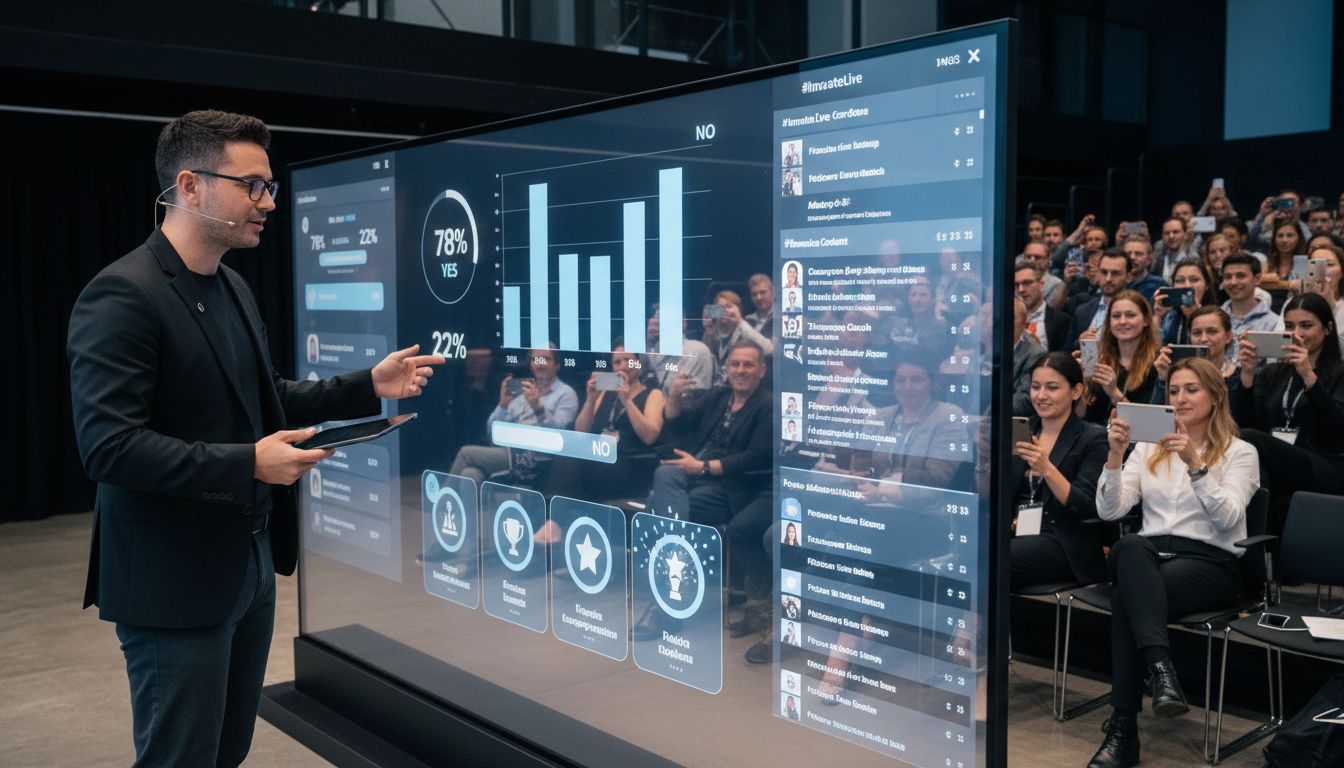
Interactive displays now represent a sophisticated spectrum of engagement tools. Events Studio highlights the power of technologies like Audience Response Systems and live Q&A platforms that facilitate real-time interaction and immediate feedback during events. These systems break down traditional barriers between presenters and audiences, creating more dynamic and participatory environments.
Key types of event displays that drive success include:
- Digital Interactive Walls: Large touch-sensitive surfaces enabling collaborative interactions
- LED Video Walls: High-resolution screens for immersive visual storytelling
- Holographic Displays: Three-dimensional projections creating futuristic engagement
- Touchscreen Kiosks: Self-service information and interaction points
- Projection Mapping: Dynamic visual projections transforming physical spaces
To maximize impact, event organizers must strategically select display technologies that align with their specific audience demographics, event objectives, and communication goals. By understanding these diverse display options, businesses can create memorable experiences that not only inform but truly connect with participants.
Key Features That Drive Audience Interaction
Audience interaction demands more than passive presentation. We & Goliath emphasizes that successful engagement hinges on integrating dynamic visual content, live polling, and creating genuine interactive experiences that transform viewers from spectators to active participants.
Sprout Social highlights that understanding your target audience is fundamental to driving meaningful interactions. Modern display technologies must leverage advanced strategies like AI-powered insights and social listening to create personalized, responsive engagement experiences that resonate deeply with participants’ specific interests and preferences.
Key features that drive powerful audience interaction include:
- Real-Time Feedback Mechanisms: Instant polling and response systems
- Personalization Technologies: Adaptive content that adjusts to audience demographics
- Gamification Elements: Interactive challenges and reward structures
- Social Media Integration: Live sharing and digital connectivity options
- Data Visualization: Complex information presented through engaging graphics
Successful audience interaction requires a strategic approach that combines technological innovation with genuine human connection. By carefully selecting and implementing these interactive features, organizations can create memorable experiences that not only capture attention but also foster meaningful engagement.
Design Strategies for Maximum Visual Impact
We & Goliath emphasizes that creating maximum visual impact requires more than just attractive graphics. Successful design strategies involve strategic visual storytelling that captures audience attention through interactive questions, carefully curated visuals, and engagement activities that transform passive viewing into an immersive experience.
Connected Event Group highlights the critical role of multimedia content in creating dynamic visual experiences. By integrating diverse visual elements like motion graphics, animated data visualizations, and interactive multimedia, display designers can create compelling narratives that immediately capture and maintain audience interest.
Key design strategies for maximum visual impact include:
- Color Psychology: Utilizing strategic color schemes that evoke emotional responses
- Narrative Flow: Creating visual content with clear, compelling storytelling progression
- Multimedia Integration: Blending static and dynamic visual elements
- Responsive Design: Adapting visuals for different screen sizes and viewing contexts
- Minimalist Composition: Using negative space to highlight critical information
Successful visual design is about creating an emotional connection. By thoughtfully combining technology, storytelling, and strategic visual communication, organizations can develop displays that not only inform but truly resonate with their target audience.
Common Pitfalls and How to Avoid Them
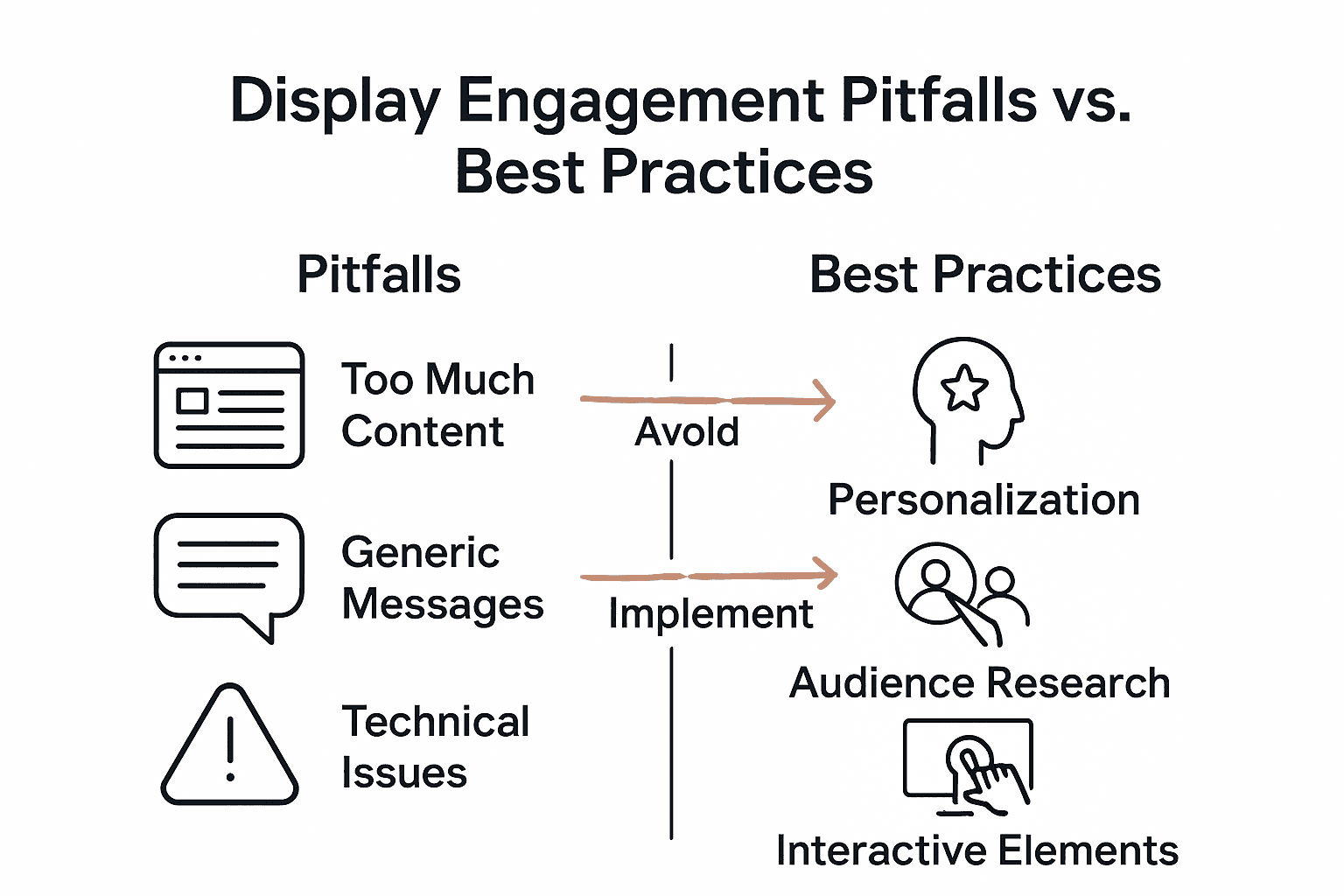
Utah State University emphasizes that the most critical mistake in audience engagement is failing to understand your target audience. Audience misalignment can lead to disengagement, rendering even the most sophisticated display technologies ineffective. Successful organizations must invest time in comprehensive audience research, developing detailed personas that guide content and interaction strategies.
We & Goliath warns against a common trap of information overload. Presenters often mistakenly believe that more content equals better communication, when in reality, this approach overwhelms and alienates audiences. Strategic engagement requires carefully curated, digestible information distributed through interactive elements that maintain audience attention and interest.
Common display engagement pitfalls to avoid include:
- Content Saturation: Overwhelming audiences with excessive information
- Generic Messaging: Using one-size-fits-all communication approaches
- Technological Complexity: Implementing overly complicated interactive systems
- Lack of Personalization: Failing to adapt displays to specific audience segments
- Ignoring Feedback Loops: Not incorporating audience response mechanisms
Successful audience engagement is an art of balance. By understanding potential mistakes and proactively designing around them, organizations can create display experiences that are both informative and genuinely compelling.
Elevate Your Audience Engagement with Custom Display Solutions
The challenge of turning passive viewers into active participants is at the heart of successful audience engagement. As the article highlights, creating meaningful connections through compelling visual storytelling and interactive elements is essential. If you want to avoid common pitfalls like generic messaging or content overload and instead captivate your audience from the first glance, the right display products make all the difference.
Live Displays offers a wide selection of customizable options like Roll Up Banner Stands that are designed to grab attention instantly. Our high-quality prints and vibrant colors support your storytelling and branding efforts, ensuring your message resonates. With free artwork proofs and bespoke customization, you can easily create displays that speak directly to your audience’s interests and event goals.
Ready to transform your event presence and engage your audience more deeply? Visit Live Displays today to explore our full range of display solutions. Take action now to secure free shipping offers and create displays that truly connect with your audience.
Frequently Asked Questions
What is audience engagement with displays?
Audience engagement with displays refers to the dynamic interaction between a display and its viewers, transforming passive observation into active participation. It involves creating emotional and social connections through visual experiences.
What types of displays are effective for audiences in events?
Effective display types for audience engagement in events include digital interactive walls, LED video walls, holographic displays, touchscreen kiosks, and projection mapping, which all enhance interactivity and immersive experiences.
How can I design displays that maximize audience interaction?
To maximize audience interaction, utilize real-time feedback mechanisms, personalization technologies, gamification elements, social media integration, and engaging data visualizations that cater to your audience’s interests and preferences.
What are common pitfalls to avoid in audience engagement with displays?
Common pitfalls include content saturation, generic messaging, technological complexity, lack of personalization, and ignoring audience feedback loops. These can lead to disengagement and ineffective communication.
Share:
7 Essential Types of Event Displays for Maximum Impact
The Essential Guide to Investing in Custom Displays